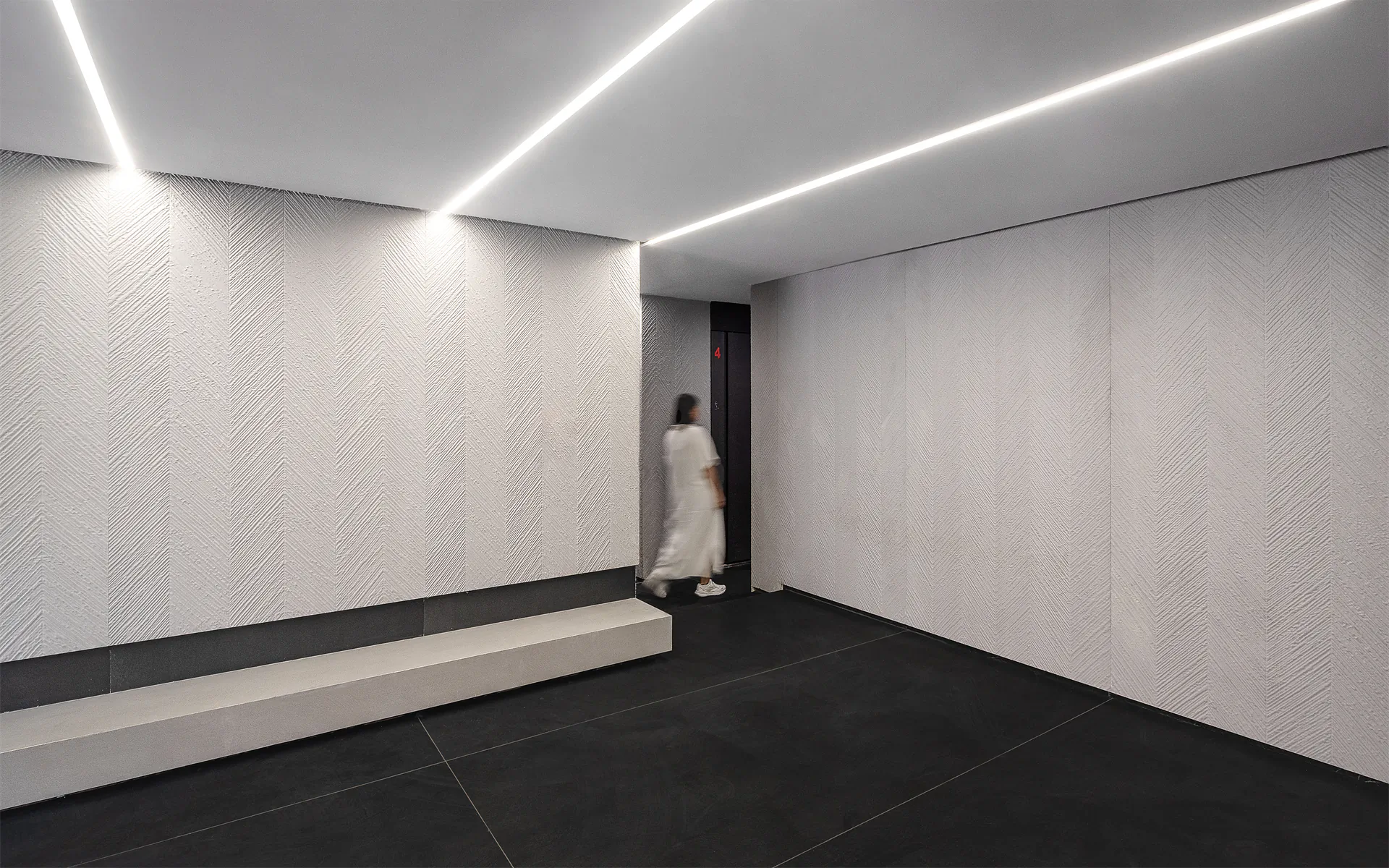
The distance the alley had denied the home, architecture gave back.
01Scene
A narrow alley, close neighbours, and windows that, opened carelessly, would put the life inside on display for every passer-by. Astaneh was born on such a site, where almost no distance remained between the home and the city.
02The knot
The question was simple; the answer was not: how can a home open itself to the outside without giving up the privacy of daily life?
03Untying the knot
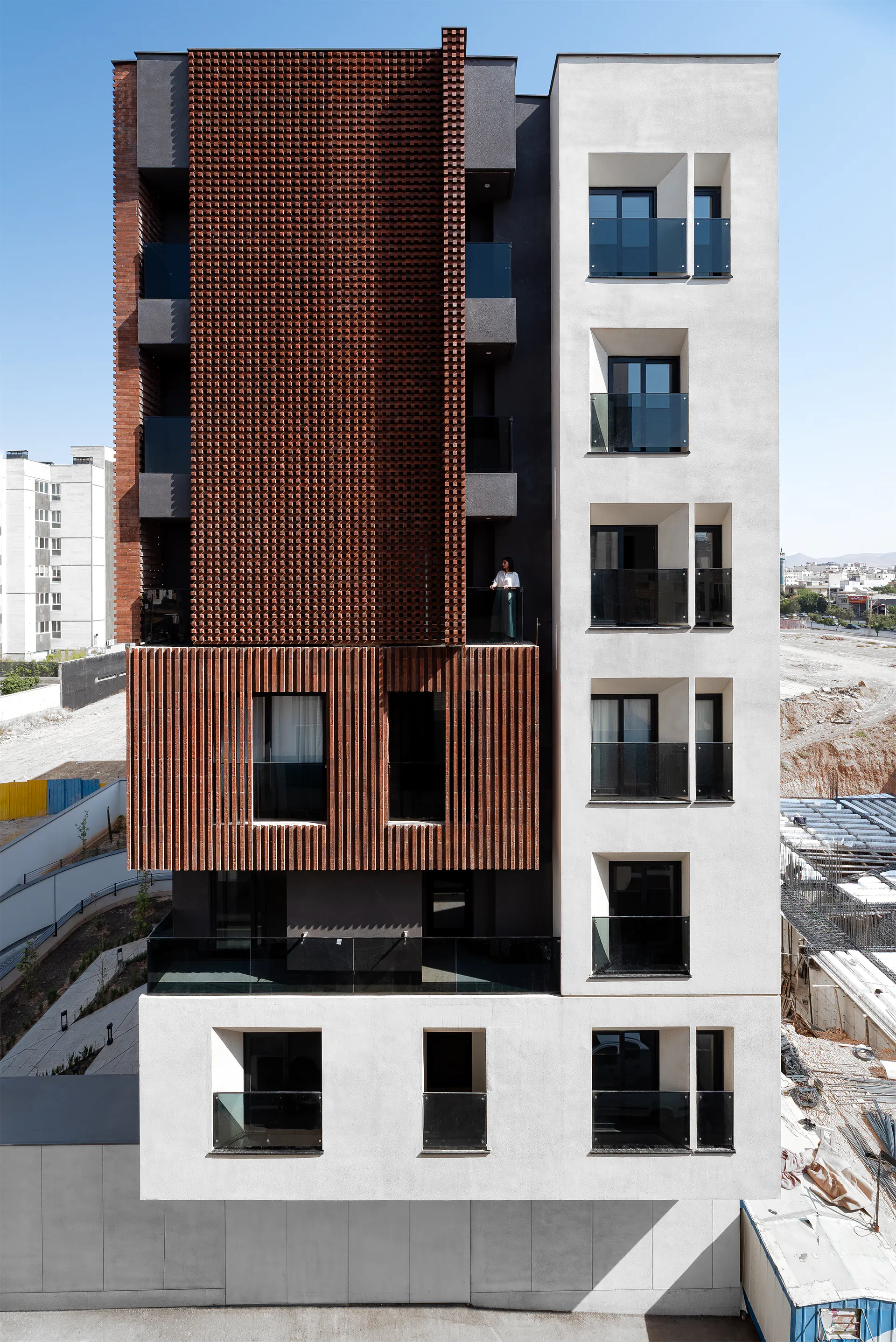
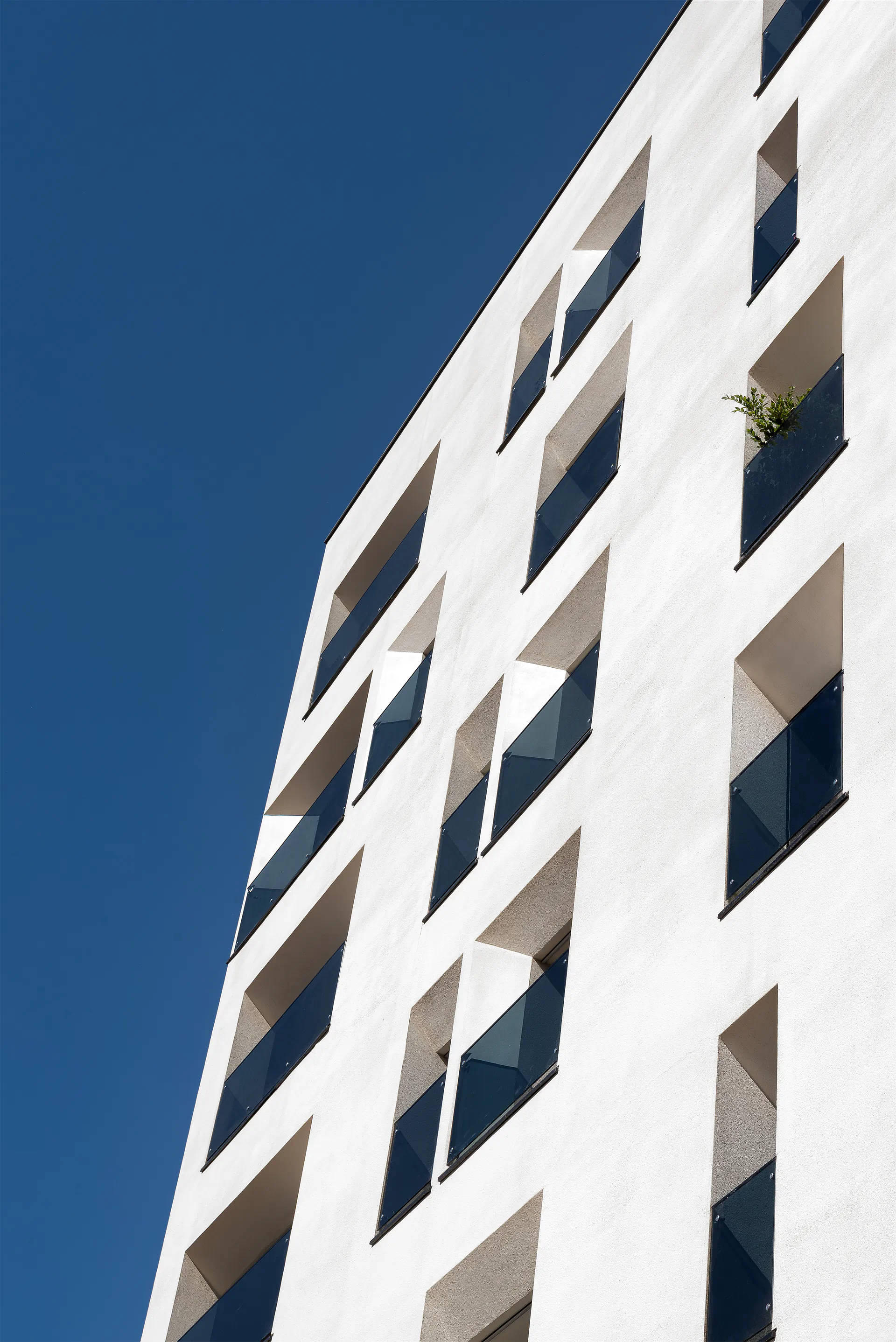
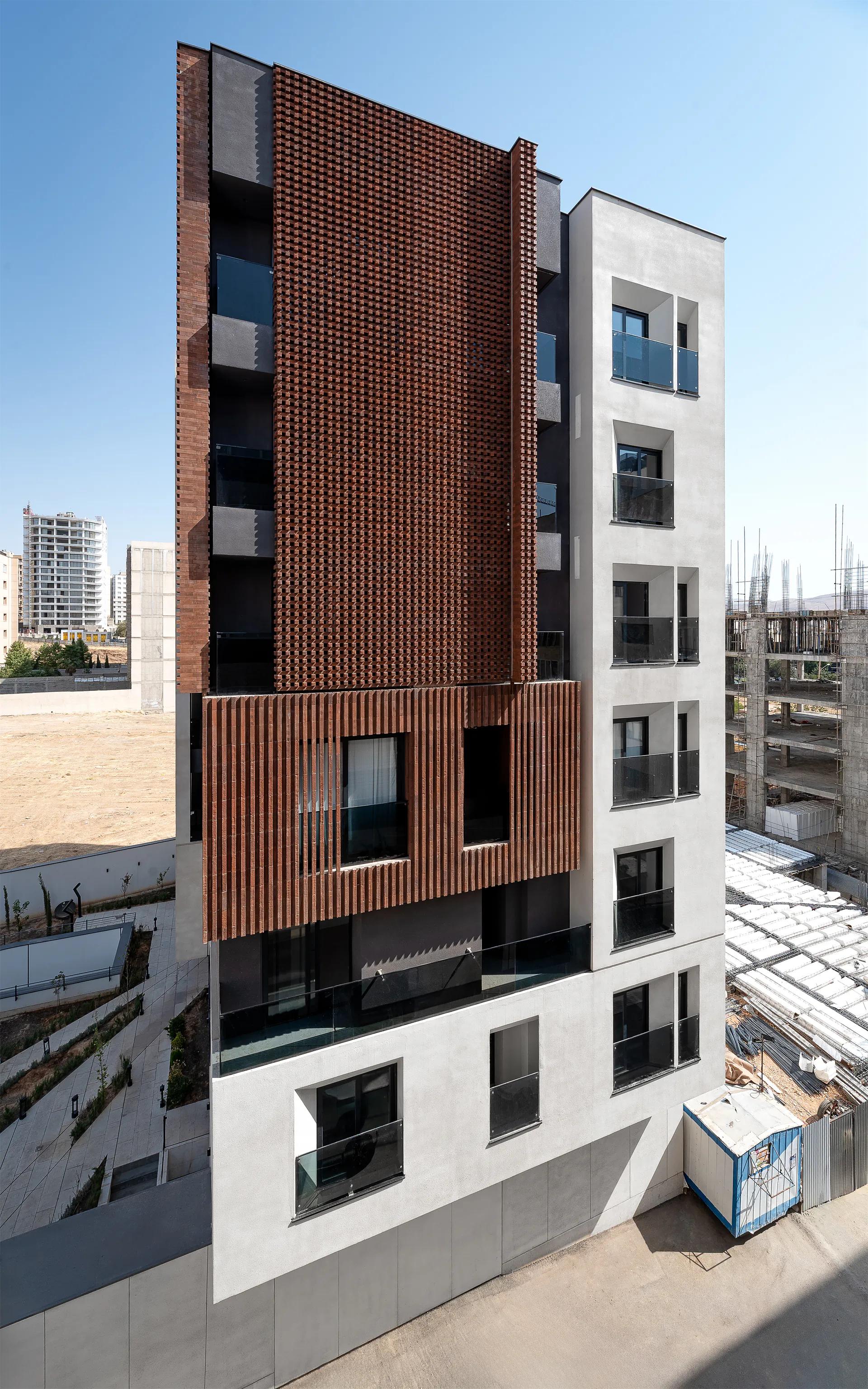
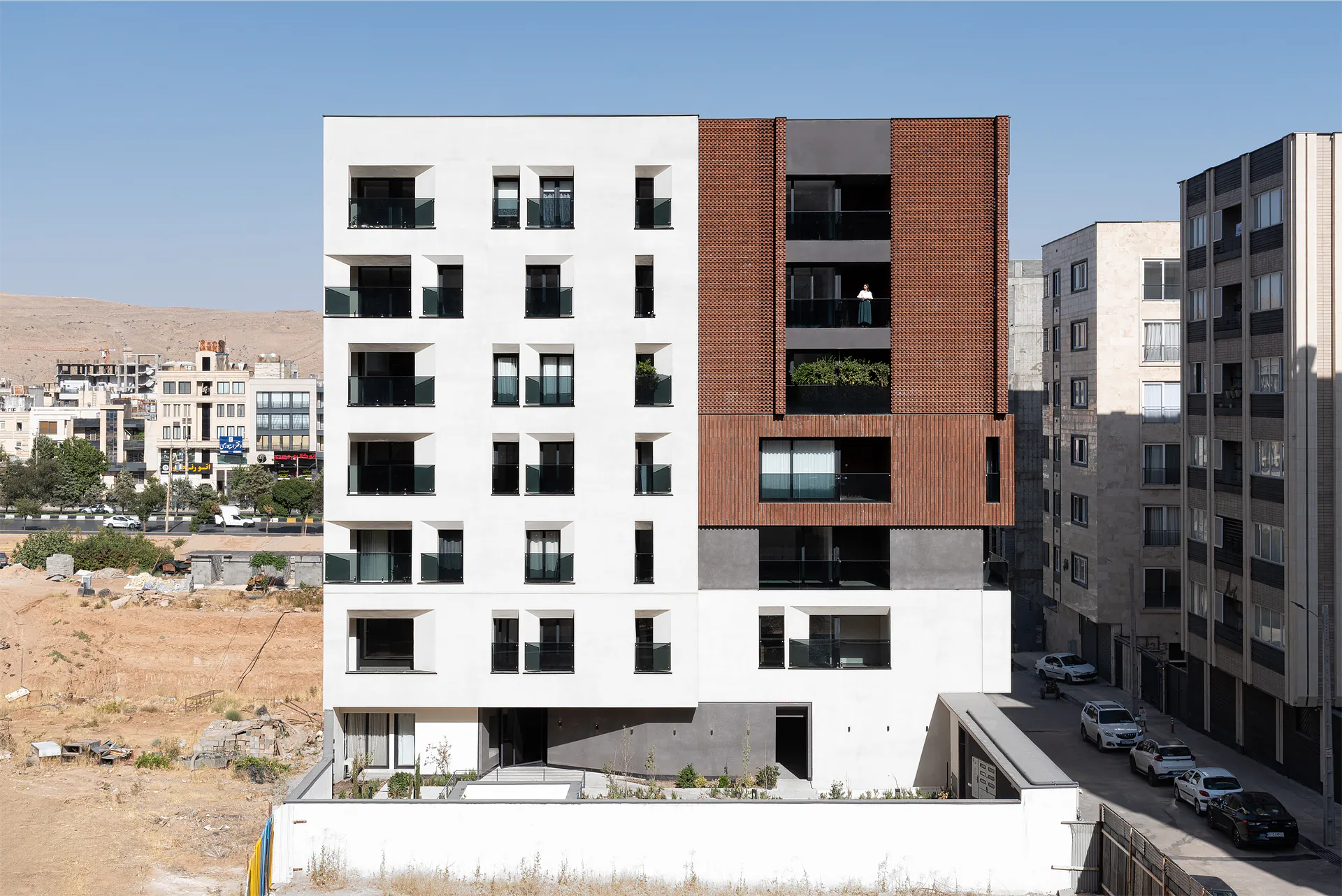
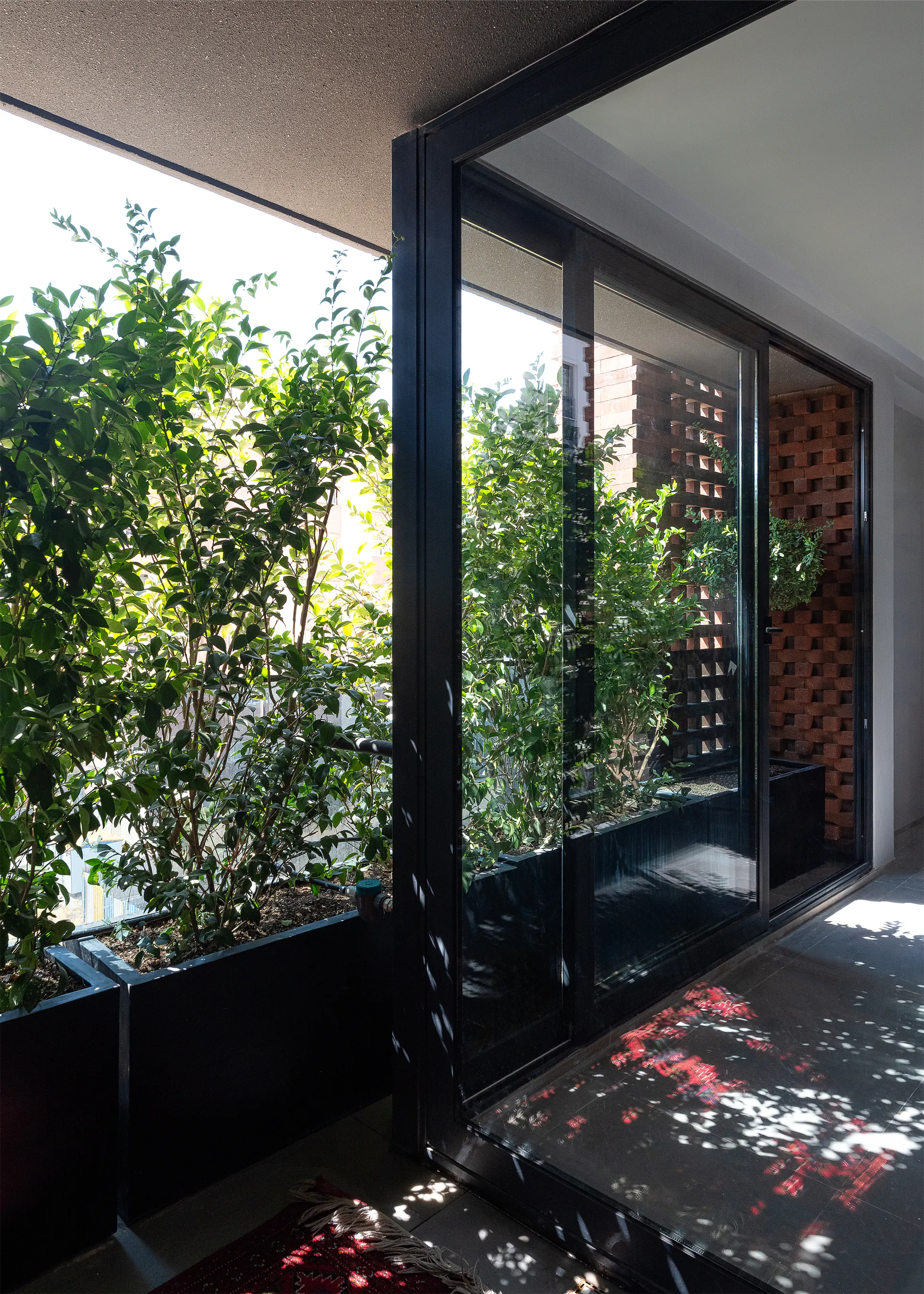
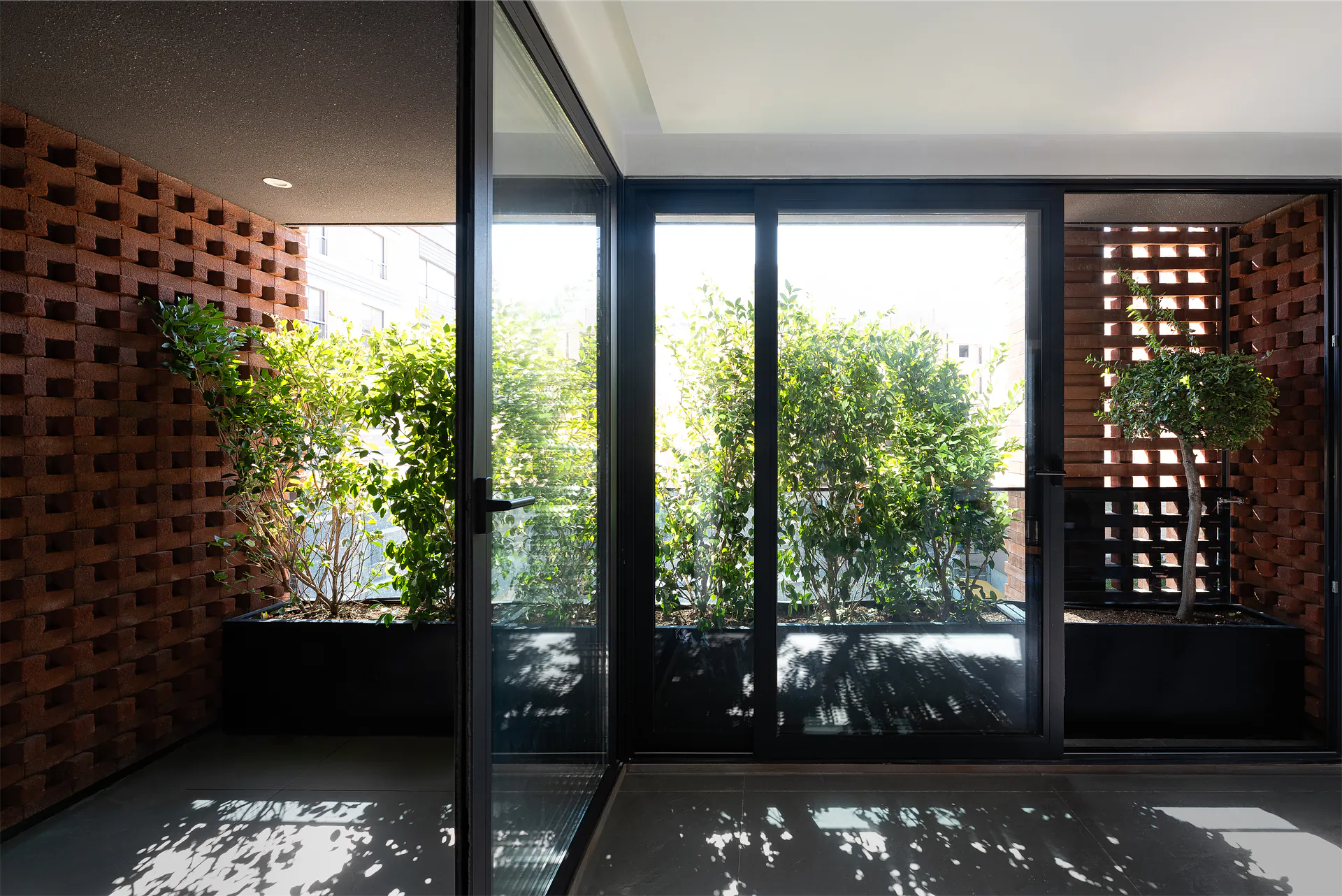
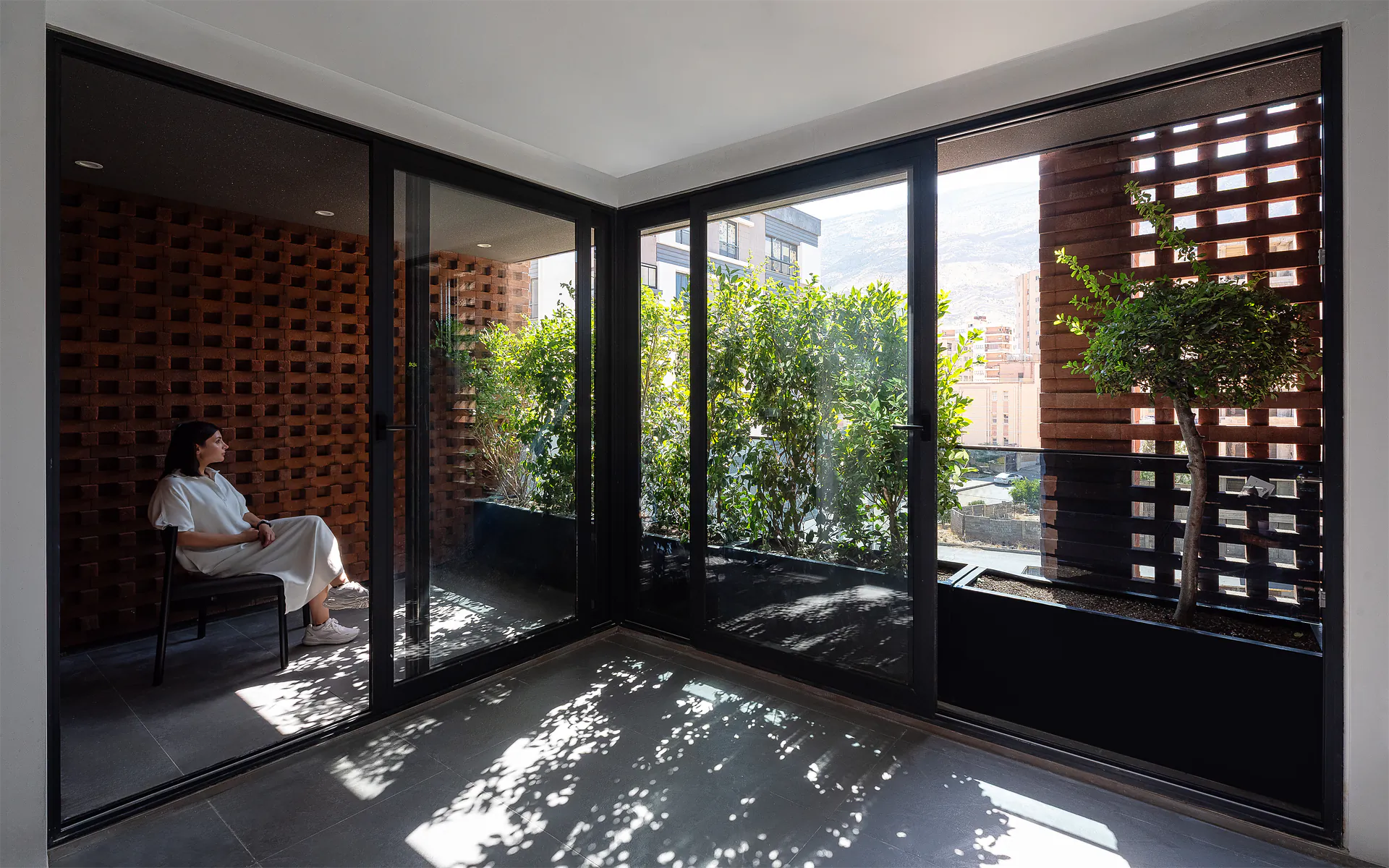
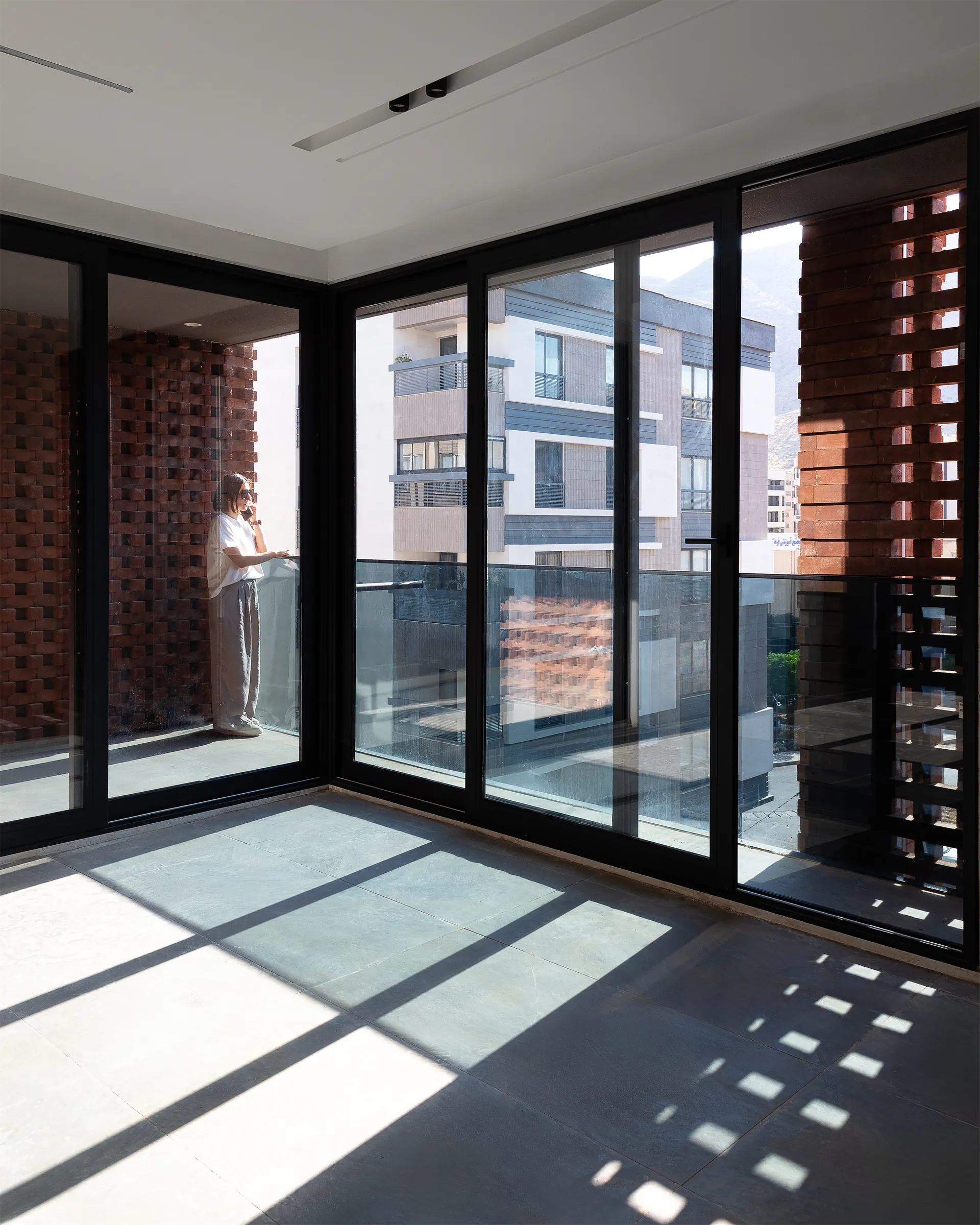
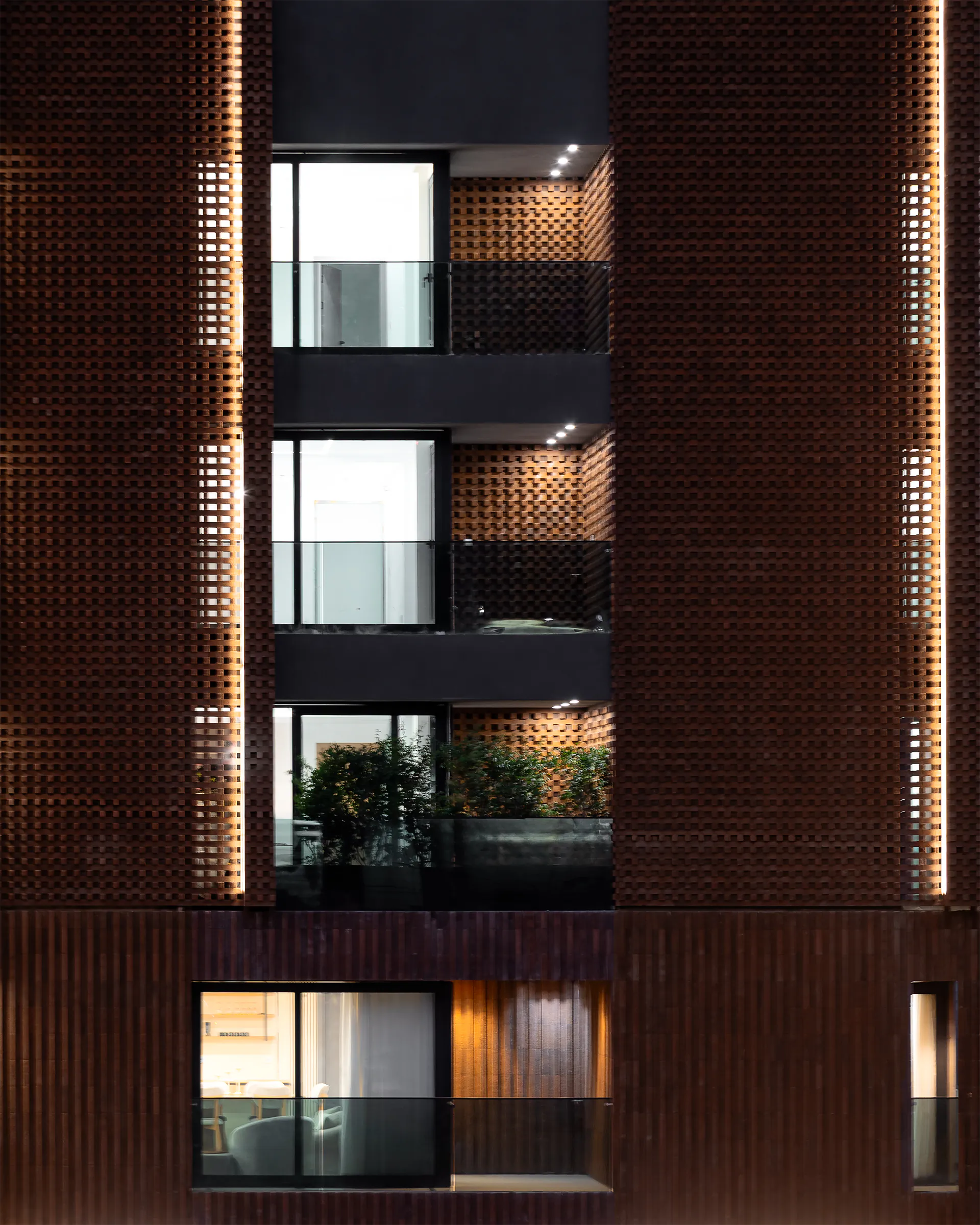
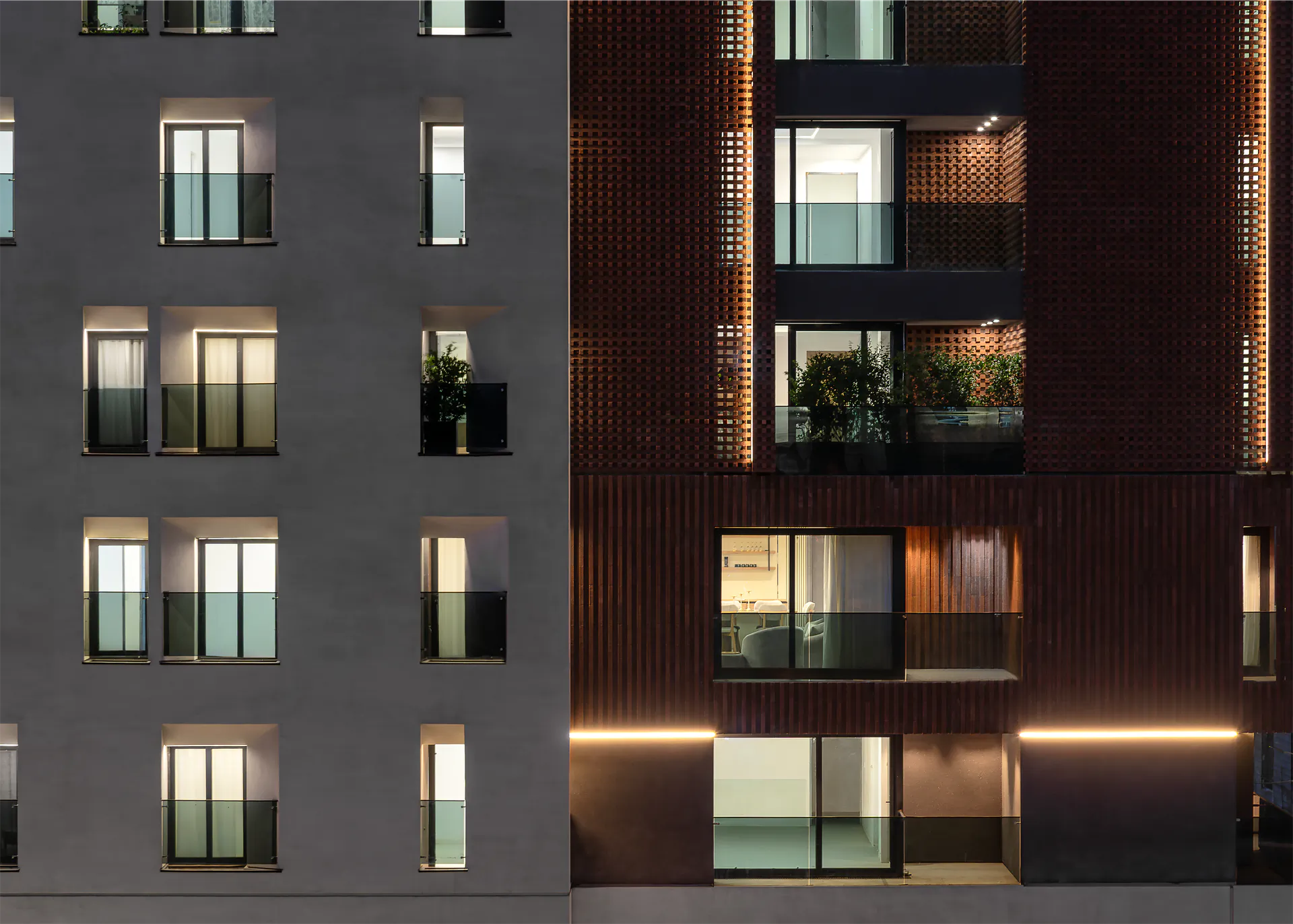
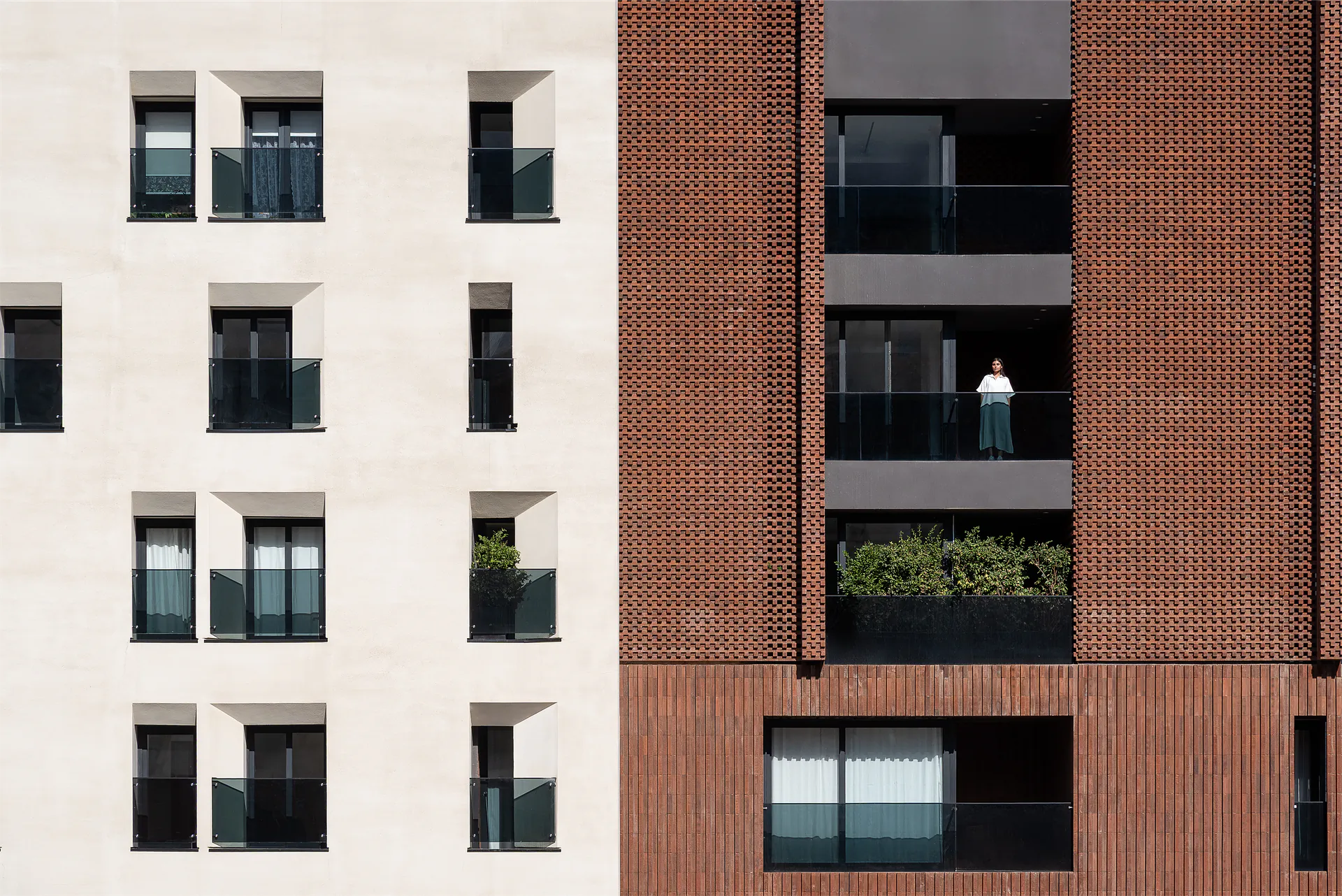
The answer began with the façade: not its surface, but the depth that could grow between room and street. On the alley side, windows stepped back, terraces took shape and planters settled along the openings. Even the built-in wardrobes were moved, so that this depth would cost the rooms nothing of their usable space.
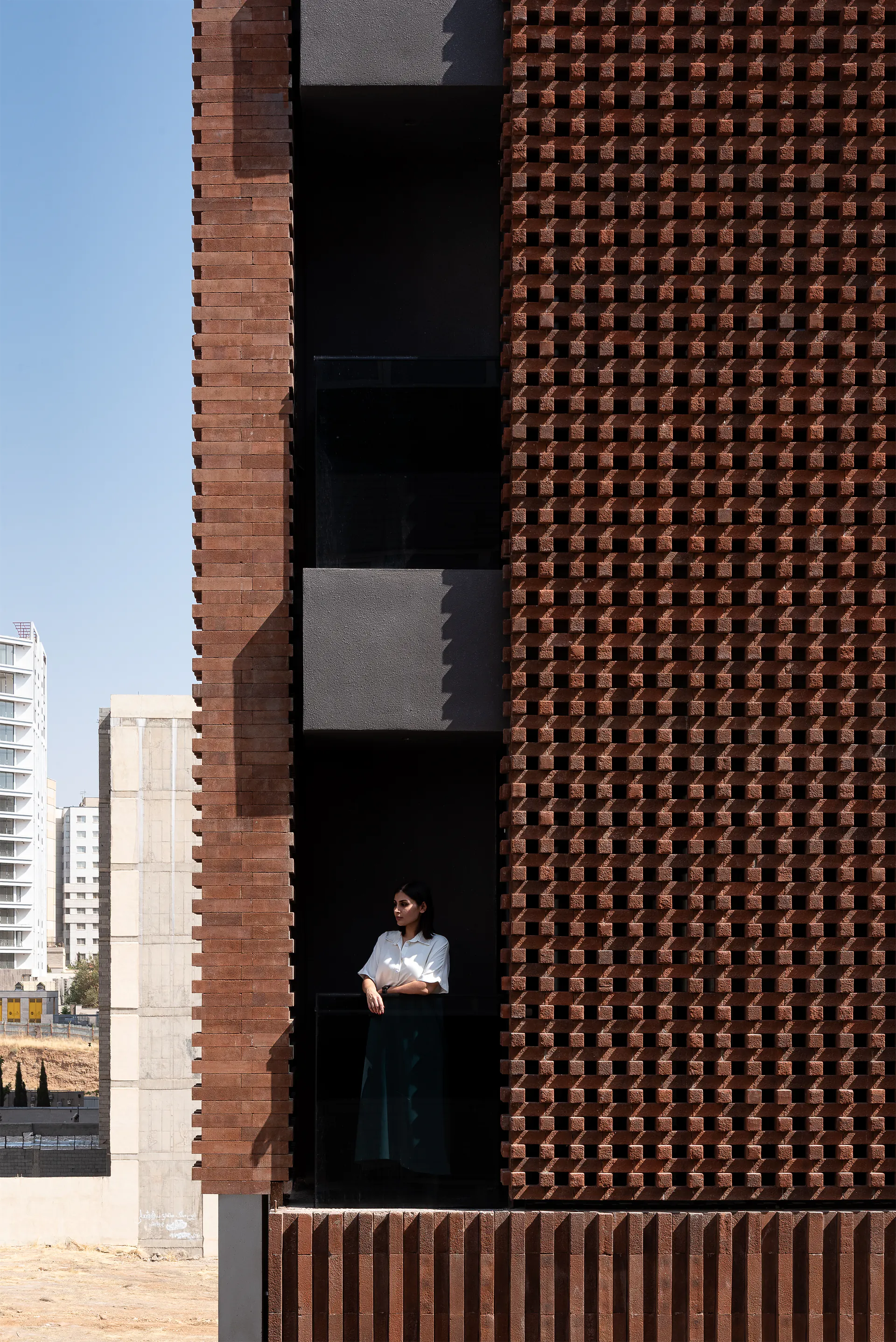
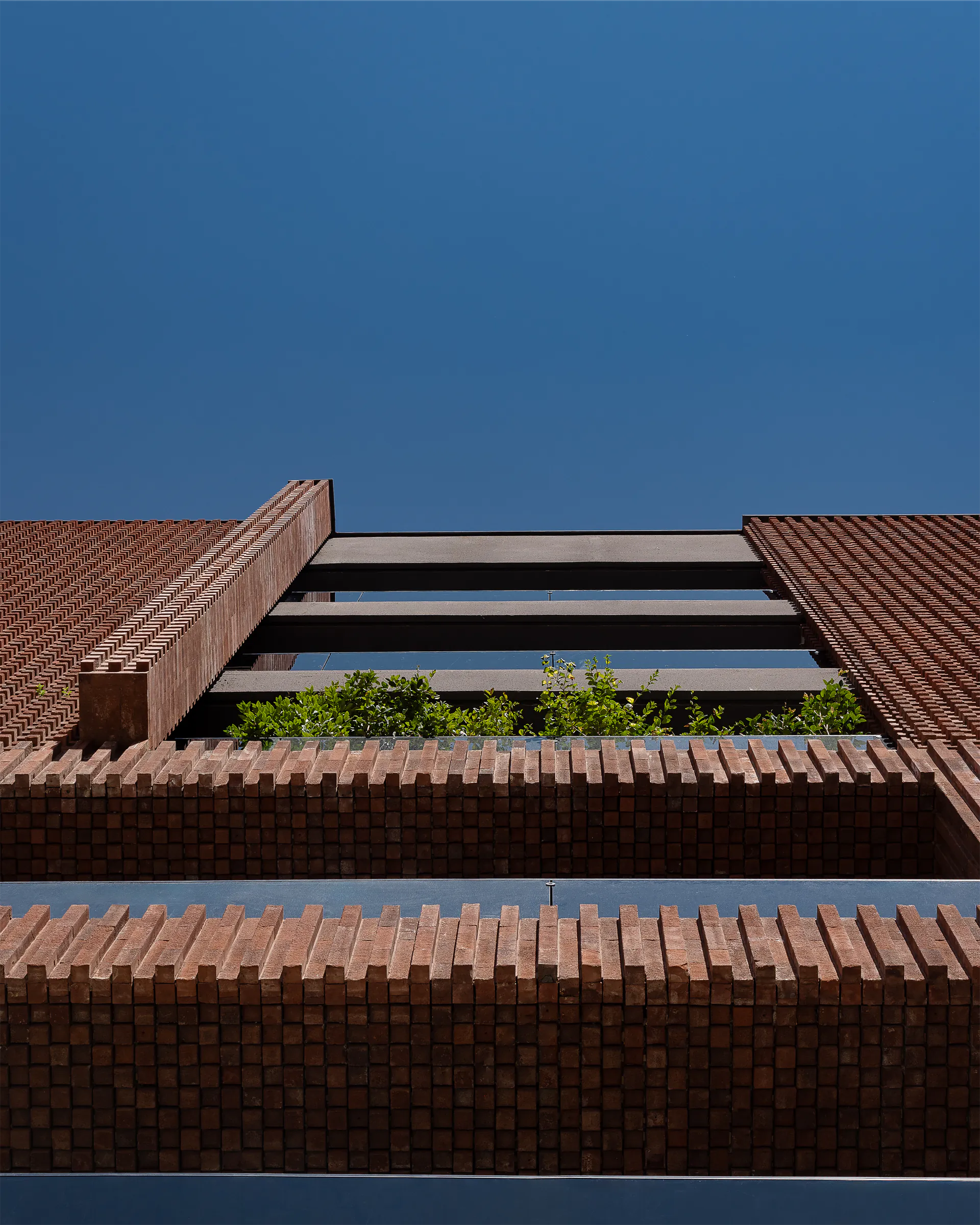
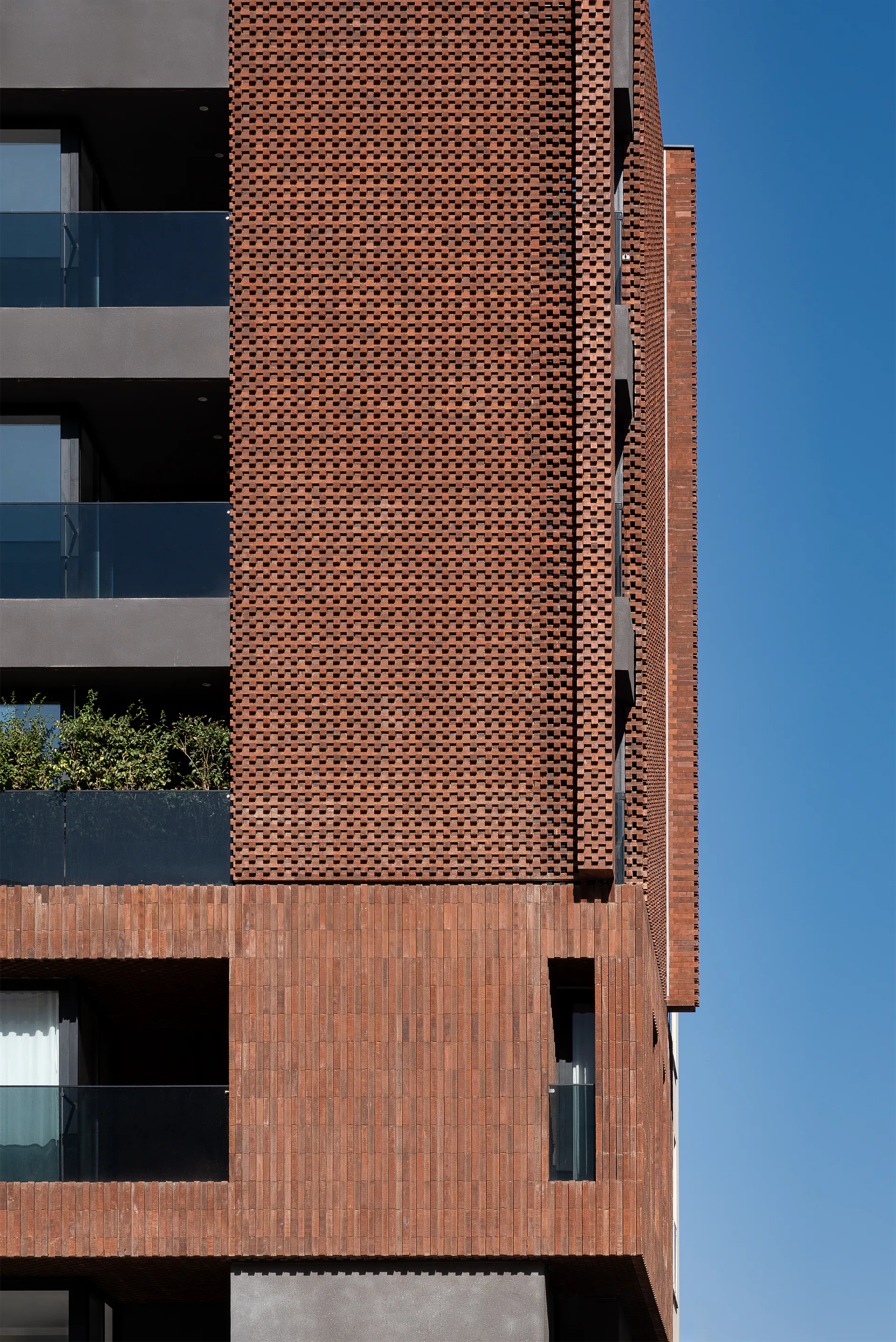
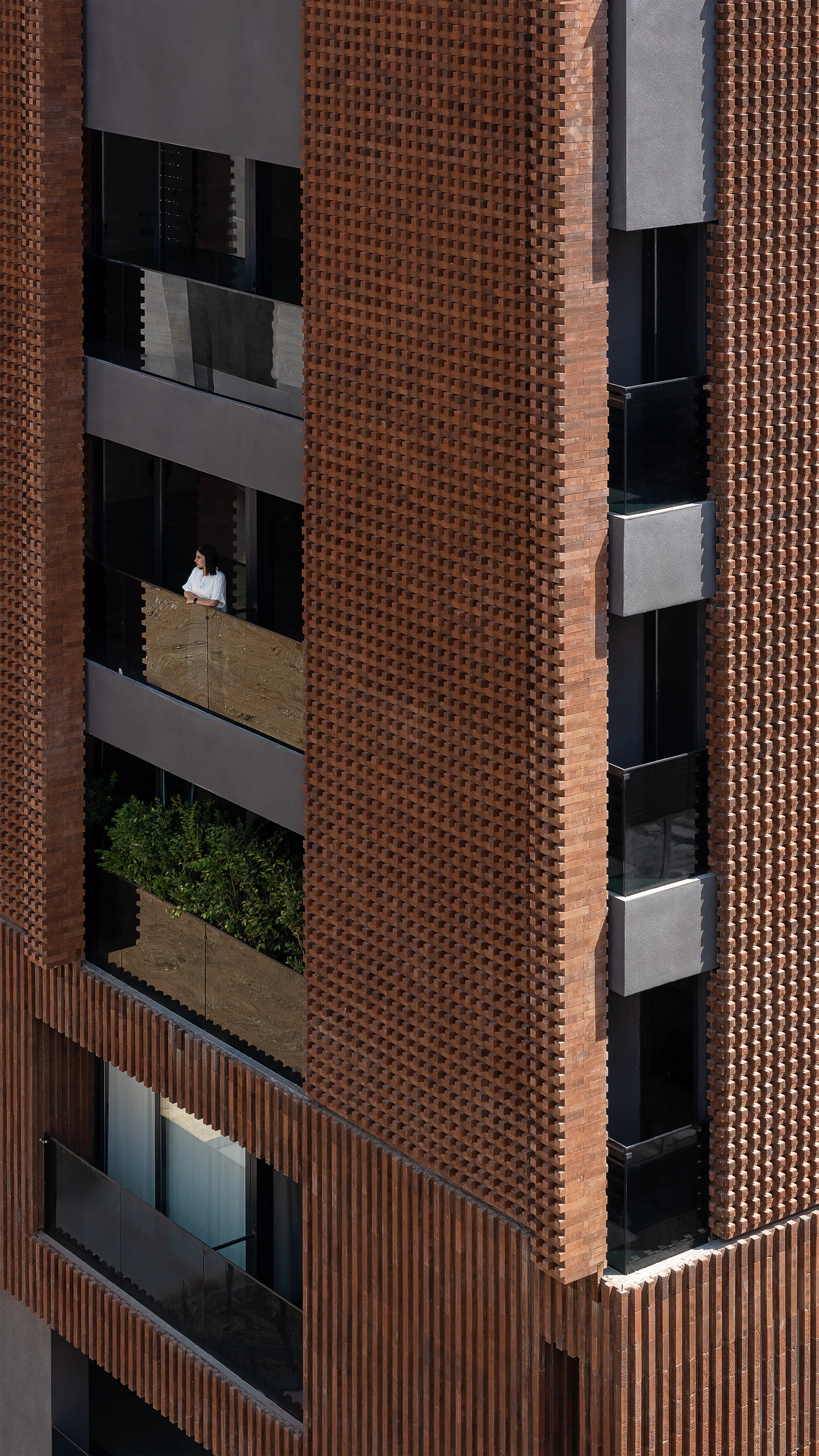
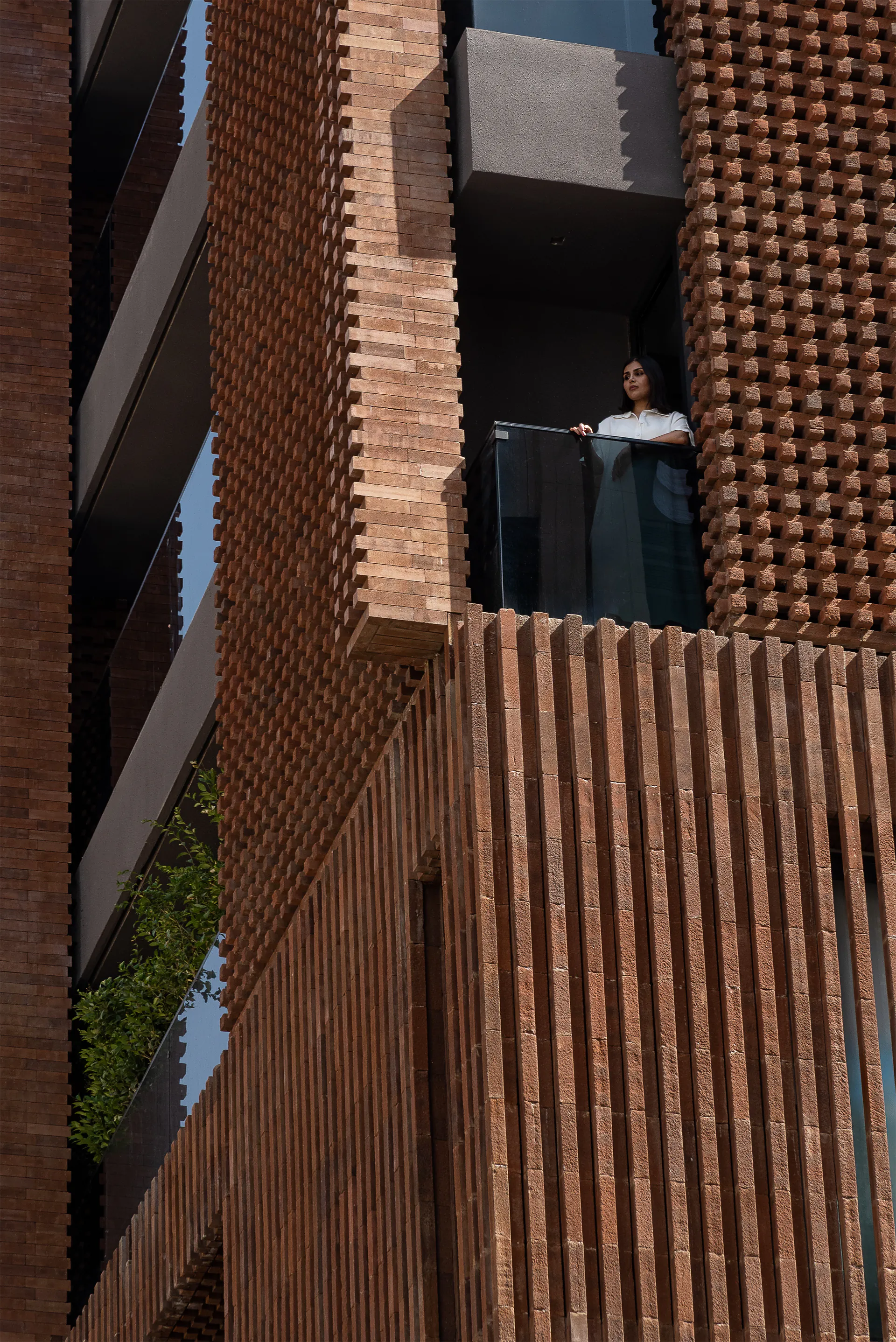
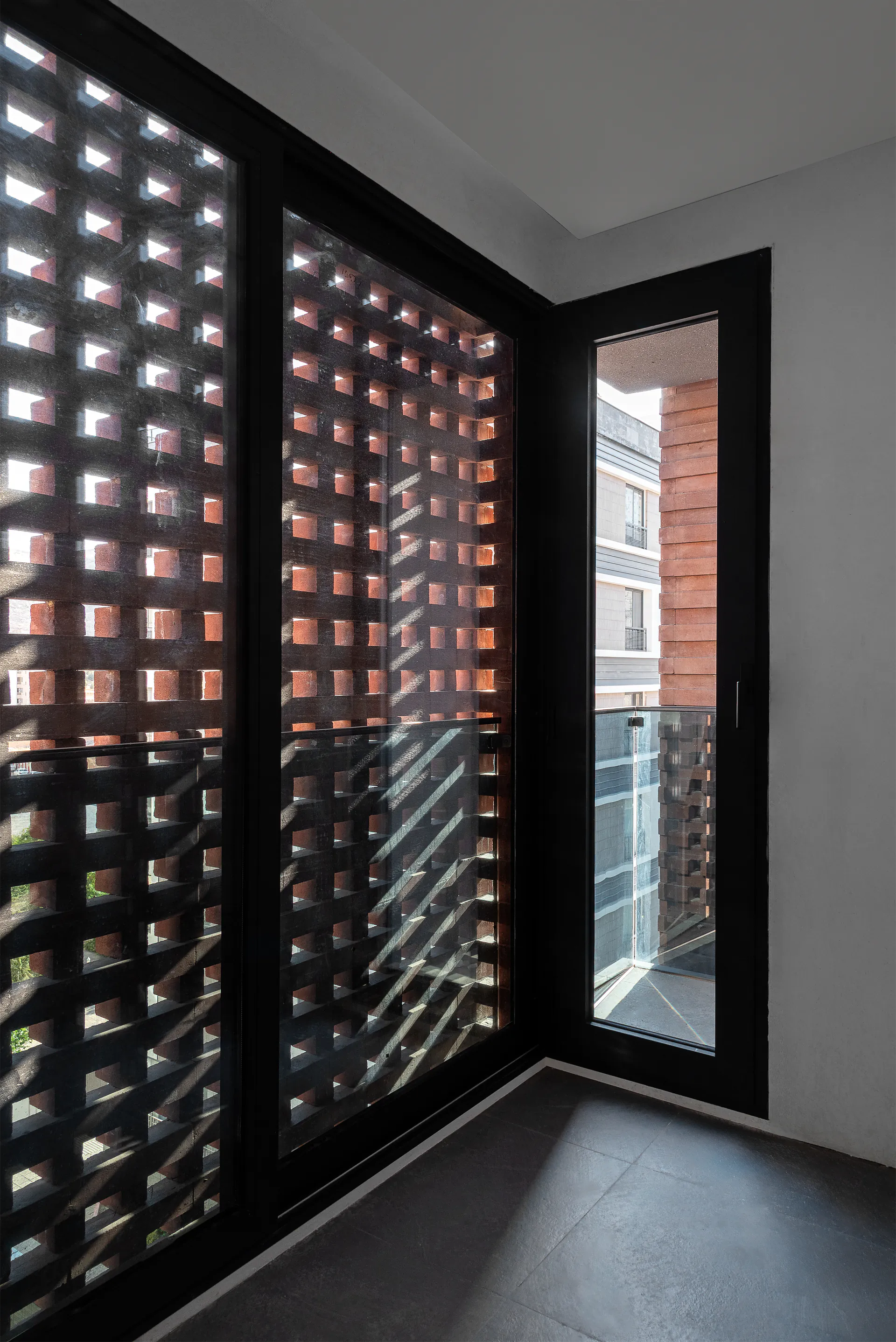
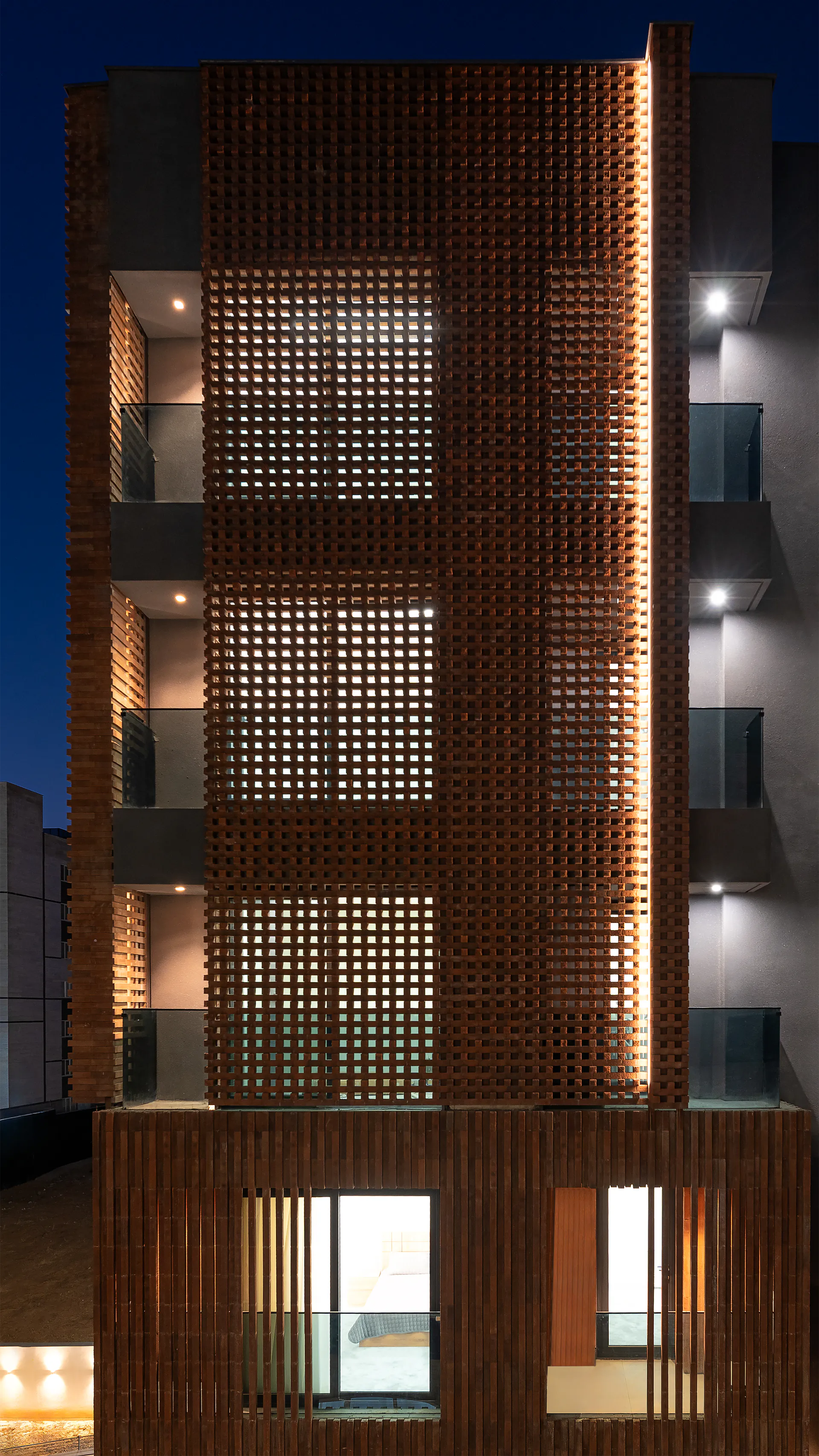
A skin of perforated brick became the layer between home and city. It filters the gaze, tempers the light, and still never cuts the thread to the outside. The brick is more than ornament: it defines privacy, conceals the building services and gives the building its identity. Used with care, and with a close eye on construction cost, it reconciles architectural quality with the economics of building.
On the other side, the courtyard front, with fewer demands for privacy, found a lighter, more open face. The building’s two faces were not born of a wish for variety, but of two different conversations with their surroundings. And although the plans repeat from floor to floor, shifts in depth, the rhythm of the openings and the contrast of brick against white surfaces keep the façade from monotony.
For us the façade was never a flat, frontal image. It is experienced as the eye travels from street to sky: in the depth of the terraces, the undersides of the balconies and the shadows sliding across each surface. At night, when the rooms light up, the roles reverse, and the skin that protected the home by day returns the glow of life to the street.
What protects the home by day returns the light of life to the city by night.
04Epilogue
Astaneh is an attempt to build a distance the site did not have. Here the façade is not a border between home and city; it is a threshold that tunes the relationship between them.